
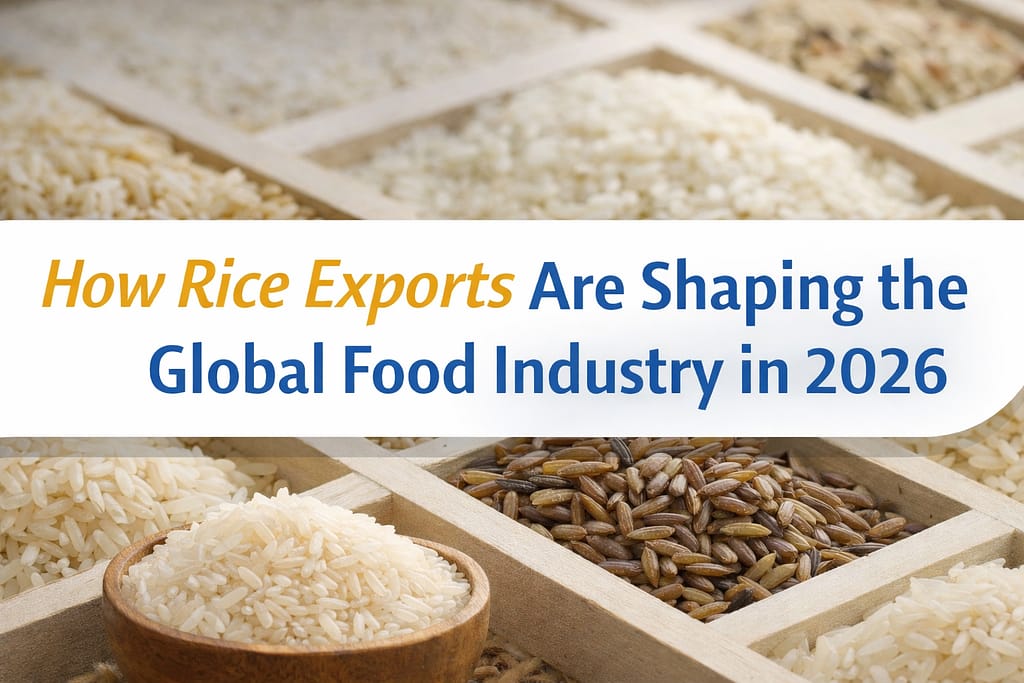
In 2026, the global food industry is being reshaped by shifting trade policies, evolving consumer preferences, and supply chain realignments. At the center of this transformation is rice export from India, which continues to influence pricing, availability, and food security across continents.
For buyers and importers, understanding the dynamics of 1121 basmati rice, non basmati rice exports, and the role of basmati rice exporters in India is critical for making profitable and stable sourcing decisions.
Why Rice Export from India Matters in 2026
India remains one of the world’s largest rice suppliers. The scale of rice export from India directly affects:
- Global rice prices
- Food inflation in importing countries
- Supply chain stability
- Long-term procurement contracts
With strong production capacity and an extensive exporter network, basmati rice suppliers in India and non-basmati exporters are shaping how global food brands plan their sourcing strategies.
1️⃣ Which Rice Variety Is Best for Export in 2026?
The answer depends on your business model, market demand, and pricing strategy.
Major Export Categories:
- 1121 Basmati Rice – Premium, long-grain aromatic rice
- Traditional Basmati Varieties – 1509, Pusa, Sugandha
- Non Basmati Rice – Parboiled, IR64, Sona Masoori, Swarna
Each category plays a different role in global trade.
2️⃣ Reading the Market Through Volumes, Value, and Buyer Behaviour
Volume vs Value Comparison
| Factor | 1121 Basmati Rice | Non Basmati Rice Exports |
| Export Volume | Moderate | Very High |
| Export Value | High per ton | Competitive pricing |
| Buyer Segment | Premium retail, HoReCa | Government tenders, bulk importers |
| Profit Margin | Higher | Volume-driven |
1121 basmati rice commands premium pricing.
- Non basmati rice exports dominate in bulk markets.
- Buyers prioritize consistency and logistics reliability in 2026.
3️⃣ Basmati: The Value Leader That Keeps Finding Buyers
Why 1121 Basmati Rice Stands Out
- Extra-long grain length
- Strong aroma and elongation after cooking
- High acceptance in Middle East, USA, UK markets
1121 basmati rice continues to lead the premium segment due to:
- Strong diaspora demand
- Fine dining and hospitality usage
- Retail packaging opportunities
Professional basmati rice exporters in India ensure:
- Strict quality grading
- Moisture control
- Export-compliant packaging
- Phytosanitary certification
For buyers targeting premium shelves, sourcing from trusted basmati rice suppliers in India remains a profitable strategy.
4️⃣ Non-Basmati: The Volume Engine of the Trade
While basmati leads in value, non basmati rice exports power global food security.
Why Non-Basmati Remains Essential:
- Affordable pricing
- High production volumes
- Suitable for government procurement
- Ideal for African & Southeast Asian markets
Importers focused on large-scale distribution benefit from:
- Stable long-term contracts
- Competitive FOB pricing
- Flexible shipment sizes
The expansion of rice export from India in the non-basmati segment continues to stabilize global supply chains.
5️⃣ Policy Risk Matters as Much as Demand
In 2026, policy changes influence trade decisions as much as demand.
Key Factors Buyers Must Monitor:
- Export duties
- Minimum export price (MEP) rules
- Government restrictions
- Currency fluctuations
Importers working with experienced basmati rice exporters in India reduce risk through:
- Updated compliance knowledge
- Flexible shipment planning
- Transparent contract structures
Reliable basmati rice suppliers in India help buyers navigate these uncertainties effectively.
6️⃣ Destination Economics Decide the Winner
Different regions prefer different varieties.
Market Preference Overview
| Region | Preferred Variety |
| Middle East | 1121 Basmati Rice |
| USA & UK | Premium Basmati |
| Africa | Non Basmati Rice |
The growth of rice export from India is closely linked to destination-specific demand patterns.
7️⃣ What 2026 Is Likely to Look Like
Industry trends suggest:
- Continued demand for 1121 basmati rice in premium markets
- Expansion of non basmati rice exports for food security programs
- Stronger focus on sustainability & traceability
- Digitized trade documentation
Global buyers are prioritizing:
- Long-term partnerships
- Consistent grain quality
- On-time delivery
- Export compliance assurance
This is where established basmati rice exporters in India stand out by offering structured export operations and dependable supply chains.
8️⃣ So, Which Variety Is Really Best?
There is no single answer.
Choose 1121 Basmati Rice if:
- You target premium consumers
- You want higher margins
- Your market values aroma & grain length
Choose Non-Basmati Rice if:
- You focus on volume
- You serve price-sensitive markets
- You participate in bulk tenders
In 2026, successful importers diversify their sourcing strategy across both segments of rice export from India.
Conclusion
In a rapidly evolving global food market, success depends on choosing the right export partner. Global Pulse International Pvt Ltd continues to strengthen its position in rice export from India, offering premium 1121 basmati rice and reliable non basmati rice exports to global buyers.
As one of the dependable basmati rice exporters in India and trusted basmati rice suppliers in India, we deliver consistency, compliance, and competitive value—ensuring your supply chain remains strong and future-ready.
Partner with Global Pulse International Pvt Ltd and build your rice trade with confidence.